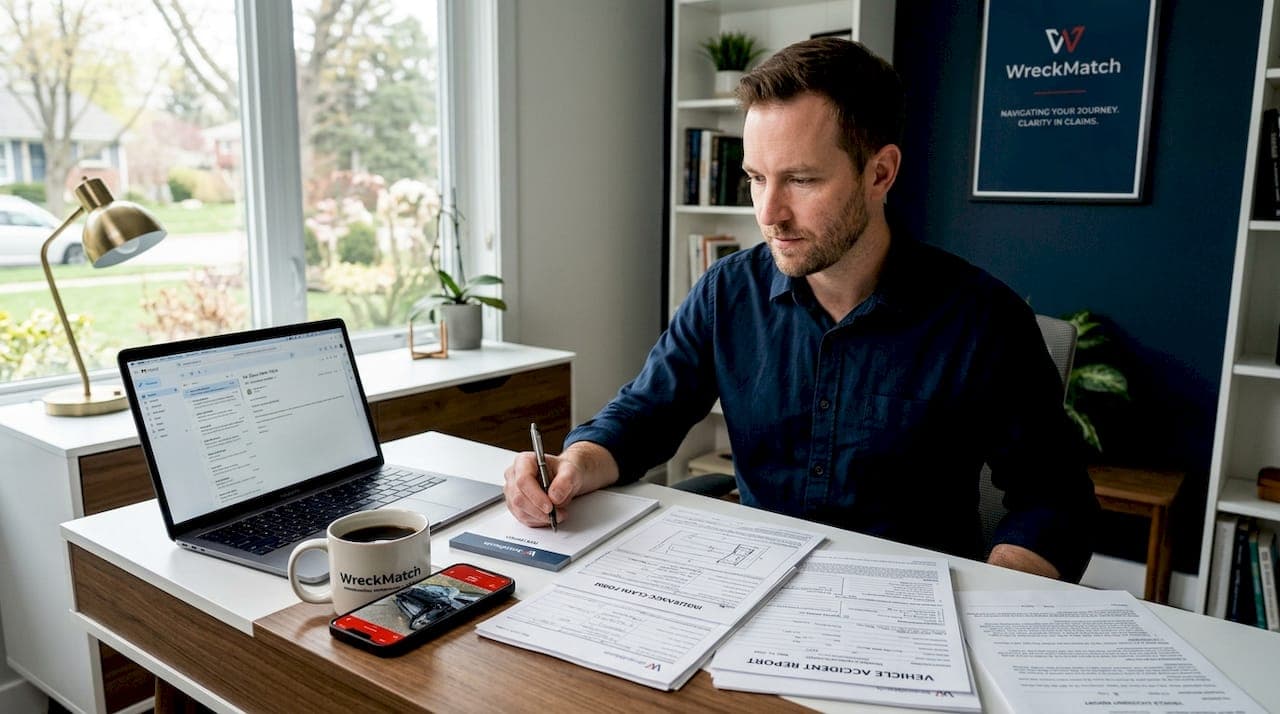
The car accident property damage claim process is the formal procedure for seeking compensation to repair or replace your vehicle after a crash, filed through your own insurer or the at-fault driver's insurance company. Most people have no idea how many steps are involved until they are standing in a parking lot with a damaged car and a phone full of unanswered questions. This guide walks you through every stage: what to do at the scene, how fault shapes your claim, what documents you need, how insurers calculate repair versus total loss, and how to avoid the mistakes that cost claimants real money. Tools like CCC One valuation software and terms like actual cash value (ACV) will come up. You will know exactly what they mean before you finish reading.
What steps should you take immediately after a car accident?
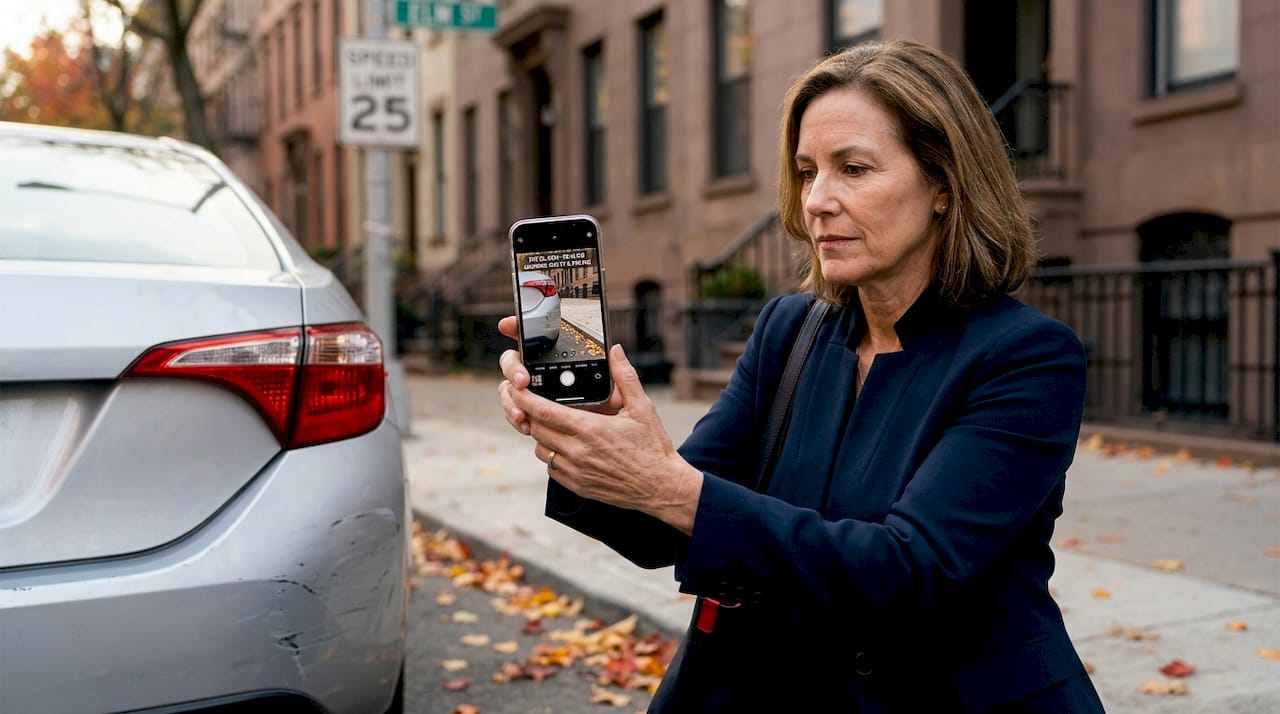
The actions you take in the first 30 minutes after a crash directly determine how strong your property damage claim will be. Most people focus on the other driver. The smarter move is to focus on evidence.
Follow these steps in order:
- Move to safety first. If your vehicle is drivable and you are not blocking traffic dangerously, move it to the shoulder or a nearby lot. Call 911 if anyone is injured or if the vehicles cannot be moved safely.
- Document the damage before anything moves. Photograph damage from multiple angles before any repair or tow. Capture wide shots of the full scene, close-ups of each impact point, tire marks, debris, and road conditions. Video works even better.
- Collect the other driver's information. Get their full name, phone number, license plate, driver's license number, and insurance card. Photograph all of it.
- Talk to witnesses. If bystanders saw the crash, ask for their names and phone numbers. A witness statement can resolve fault disputes that would otherwise drag on for weeks.
- Get a police report. Claims evaluation relies heavily on the police report and accurate accident details. Missing or incorrect information slows claim processing significantly. Ask the responding officer for the report number before they leave the scene.
- Notify your insurer. Call your insurance company the same day. Most policies require prompt notification, and delays can create coverage complications.
Pro Tip: Use your phone's timestamp feature when photographing the scene. Insurers and adjusters pay attention to when photos were taken. Photos captured within minutes of the crash carry far more weight than ones taken hours later.
How does fault determine which insurer handles your claim?
Fault is the single biggest factor in deciding where you file your claim and who pays. Getting this wrong wastes weeks.
- Third-party claim: If the other driver caused the accident, you file against their liability insurance. Their insurer pays for your vehicle damage up to their policy limits. This is the most common route when fault is clear.
- First-party collision claim: If you were at fault, or if fault is disputed, you file with your own insurer under your collision coverage. You pay your deductible, and your insurer handles the rest.
- Uninsured or underinsured motorist property damage (UMPD): If the at-fault driver has no insurance or insufficient coverage, your own UMPD coverage steps in. Not every state requires this coverage, so check your policy now, before you need it.
- Non-driver fault scenarios: Property damage claims may include damage to mailboxes, fences, or other property. If a road defect or a government entity caused the crash, the claim process shifts entirely and may involve a government tort filing with strict deadlines.
One critical distinction: property damage claims differ from bodily injury claims in adjusters, timelines, and legal rules. Treating them as identical leads to errors. Your property damage adjuster and your bodily injury adjuster are different people with different authority levels. Keep those conversations separate.
What documentation do insurers require to process your claim?
Organized evidence is the difference between a fast settlement and a prolonged dispute. Documents and photos must clearly establish damage, causation, and costs, because disputes hinge on properly organized evidence.
Build a complete claims file with these items:
- ✅ Photos and videos of all vehicle damage and the accident scene
- ✅ Police report and report number
- ✅ Other driver's insurance information and contact details
- ✅ Witness names and phone numbers
- ✅ Repair estimates from one or more licensed shops
- ✅ Towing receipts and storage fees
- ✅ Rental car receipts if you needed a replacement vehicle
- ✅ All written correspondence with the insurer, including emails and claim numbers
- ✅ Any repair invoices once work is authorized
Here is a quick reference for what each document proves:
| Document | What it establishes |
|---|---|
| Photos and video | Damage scope, causation, and pre-repair condition |
| Police report | Official account of fault, conditions, and parties involved |
| Repair estimates | Reasonable cost of restoring the vehicle |
| Towing and rental receipts | Out-of-pocket losses directly caused by the accident |
| Insurer correspondence | Timeline of your claim and any offers made |
Insurers often require a damage inspection before repairs begin. Do not authorize bodywork until the adjuster has completed their inspection, unless the vehicle poses a safety hazard. Starting repairs early can void coverage for that portion of the damage.
Pro Tip: Create a dedicated folder on your phone and a backup in Google Drive or iCloud the day of the accident. Label everything by date. A well-organized claim file prevents you from scrambling for documents weeks later when the insurer requests them.
How do repair estimates and total loss decisions work?
Once your insurer receives your documentation, they assign a claims adjuster. Adjusters investigate damages, review documentation, and liaise with repair shops to verify costs. Their job is to determine whether your vehicle should be repaired or declared a total loss.
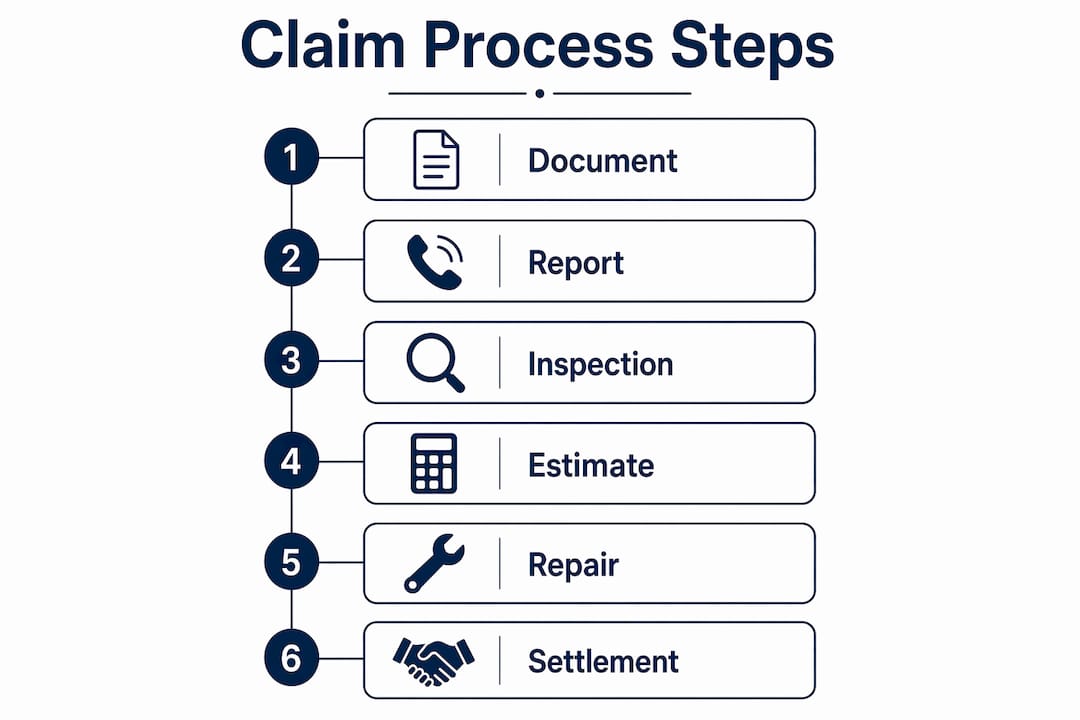
Total loss classification typically occurs when repair costs reach 75 to 80 percent of the vehicle's actual cash value (ACV). ACV is the market value of your car immediately before the accident, factoring in age, mileage, condition, and comparable sales in your area. Many insurers use CCC One valuation software to calculate this figure. The number CCC One produces is not always accurate, and you have the right to challenge it.
| Scenario | What happens |
|---|---|
| Repair costs below 75% of ACV | Insurer authorizes repairs at an approved shop |
| Repair costs at or above 75–80% of ACV | Vehicle declared a total loss; insurer pays ACV minus deductible |
| You dispute the ACV offer | You can request an independent appraisal |
| Appraisers disagree on value | An umpire is appointed to set a binding value |
You also have the right to choose your own repair shop in most states. The insurer may have a preferred network, but they cannot legally force you to use it. If the shop they recommend produces a lower estimate than an independent shop, get both in writing and present them to your adjuster.
One often-overlooked claim type is diminished value. Even after a perfect repair, your car is worth less on the market because it has an accident on its record. In many states, you can file a separate diminished value claim against the at-fault driver's insurer. Most people never ask for this money. That is a mistake.
Disputing a total loss valuation using independent appraisers and understanding the appraisal clause in your policy gives you real leverage over low insurer offers. New York Insurance Law §3411, for example, provides a structured appraisal process that avoids litigation entirely.
What are the typical timelines and pitfalls to avoid?
Speed matters, but so does patience at the right moments. Insurance companies must acknowledge claims within 10 business days and accept or deny within 15 days of receiving all required information, at least under New York regulations. Other states have similar requirements, though timelines vary. Disputes can extend these windows significantly.
Watch out for these common mistakes:
- Accepting a lowball offer too quickly. Insurers sometimes open with an offer below market value, expecting you to negotiate. Review the offer against independent repair estimates and comparable vehicle sales before responding.
- Signing a release prematurely. Accepting an early settlement or signing releases before finalizing repairs can permanently limit your ability to claim supplements or hidden damages discovered later. Never sign a release until you are certain the full scope of damage is accounted for.
- Failing to follow up. Claims do not move on their own. Call your adjuster every three to five business days if you have not received an update. Document every call with the date, time, and what was discussed.
- Missing your state's statute of limitations. Property damage claims have filing deadlines that vary by state. Missing them means losing your right to recover anything. Check your claim filing deadline as soon as possible.
- Skipping legal help when the claim gets complicated. If the insurer disputes fault, undervalues your vehicle, or delays without explanation, an attorney can intervene quickly and at no upfront cost under a contingency fee arrangement.
Key takeaways
The car accident property damage claim process requires immediate documentation, a clear understanding of fault and coverage, organized evidence, and active follow-up to reach a fair settlement.
| Point | Details |
|---|---|
| Document before repairs | Photograph all damage from multiple angles before any repair or tow. |
| Fault directs your claim | File against the at-fault driver's insurer for third-party claims or your own for collision. |
| Build a complete file | Keep every receipt, estimate, photo, and insurer correspondence in one organized folder. |
| Know your total loss rights | Challenge ACV offers using independent appraisers and your policy's appraisal clause. |
| Never sign releases early | Wait until all damage is confirmed before signing any settlement or release form. |
What I have learned from watching people fight these claims
Scott here. After years of working alongside accident victims and the attorneys who represent them, the pattern I see most often is this: people lose money not because the insurer is unbeatable, but because they did not know the rules of the game.
The biggest mistake I see is treating the adjuster like a neutral party. They are not. Their job is to close your claim at the lowest defensible number. That does not make them dishonest. It makes them employees doing their job. Your job is to push back with evidence, not emotion.
The second thing I have learned is that a well-organized claim file is worth more than any single piece of evidence. Adjusters process dozens of claims at once. When your file is complete, chronological, and easy to read, your claim gets resolved faster and more favorably. Disorganized claimants get delayed and underpaid. It is that simple.
Finally, do not wait until you are frustrated to get legal help. The time to bring in an attorney is before you sign anything, not after. Most personal injury attorneys handle property damage issues as part of a broader case, and the consultation costs you nothing.
— Scott
Get free help with your claim today
Dealing with insurers after a crash is stressful, confusing, and time-consuming. WreckMatch was built specifically to cut through that confusion and connect you with experienced attorneys who handle property damage and personal injury claims every day.
Whether you are disputing a total loss valuation, fighting a lowball repair offer, or just trying to understand your next step, WreckMatch can match you with a licensed attorney in your state at no upfront cost. Attorneys in the WreckMatch network work on contingency, meaning you pay nothing unless you win. Visit WreckMatch for free legal help now, or explore the car accident claim timeline to understand exactly where your case stands.
FAQ
What is a property damage claim after a car accident?
A property damage claim is a formal request for compensation to repair or replace your vehicle and any other damaged property after a crash, filed through your insurer or the at-fault driver's insurance company.
How long does a property damage claim take to settle?
Most straightforward claims resolve within two to four weeks, but disputes over fault or vehicle valuation can extend the process to several months. Staying organized and following up regularly shortens the timeline.
Can I choose my own repair shop for an insurance claim?
Yes. In most states, you have the right to select your own licensed repair shop. The insurer may recommend a preferred network, but they cannot legally require you to use it.
What does actual cash value (ACV) mean for my claim?
ACV is the market value of your vehicle immediately before the accident, accounting for age, mileage, and condition. If repair costs exceed 75 to 80 percent of your ACV, your insurer will likely declare the vehicle a total loss and pay you the ACV minus your deductible.
When should I get an attorney for a property damage claim?
Get an attorney before signing any settlement or release, especially if the insurer disputes fault, offers less than your vehicle is worth, or delays your claim without explanation. Most attorneys offer free consultations and work on contingency.