
You just had an accident. You're hurt, overwhelmed, and your phone is full of insurance calls you don't know how to handle. Finding a personal injury attorney quickly is one of the most important things you can do right now, and most people have no idea where to start. This guide gives you a clear, step-by-step path. You'll learn what to prepare, how to find a qualified attorney fast, what mistakes to avoid, and exactly what to expect once you make that first call.
Table of Contents
- Key takeaways
- What to gather before finding a personal injury attorney quickly
- How to find and contact a qualified attorney fast
- Common mistakes that slow you down or hurt your case
- What to expect from your first attorney consultation
- Next steps after choosing your attorney
- My honest take: speed and preparation change everything
- How Wreckmatch connects you with the right attorney fast
- FAQ
Key takeaways
| Point | Details |
|---|---|
| Act fast on deadlines | Most states give you 2 years or less to file, and some special cases require notice much sooner. |
| Prepare before you call | Gathering documents and a written timeline before contacting an attorney speeds up case evaluation significantly. |
| Use vetted referral services | Bar association referral programs pre-screen attorneys and reduce the risk of landing with an unqualified lawyer. |
| Most attorneys charge no upfront fee | Personal injury lawyers typically work on contingency, meaning you pay nothing unless you win. |
| Avoid talking to insurers alone | Speaking with an insurance adjuster before consulting an attorney can seriously weaken your claim. |
What to gather before finding a personal injury attorney quickly
Before you pick up the phone, spend 20 to 30 minutes pulling together the right information. Attorneys can evaluate your case far faster when you arrive prepared. Walking in with nothing slows everything down and can delay the start of your legal protection.
Here is what to collect:
- ✅ The official accident or police report (request a copy from the responding agency if you don't have one)
- ✅ All medical records and bills related to your injuries, including emergency room visits and follow-up care
- ✅ Photos and videos from the accident scene, your vehicle damage, and your visible injuries
- ✅ Insurance communications, including claim numbers, adjuster names, and any written correspondence
- ✅ Witness contact information if anyone saw the accident
- ✅ Your own health and auto insurance policy details
Beyond documents, write a one-page timeline of events. According to Good Men Project, a written event timeline helps attorneys quickly understand the sequence of facts and the strength of your claim. Bullet points work fine. Include the date, time, location, what happened, who was involved, and what you did next.
Pro Tip: If you are still in treatment and don't have all your medical records yet, that's okay. Write down every provider you've seen, the dates of your visits, and a summary of your injuries. Your attorney can request the full records later. Don't let incomplete paperwork stop you from calling.
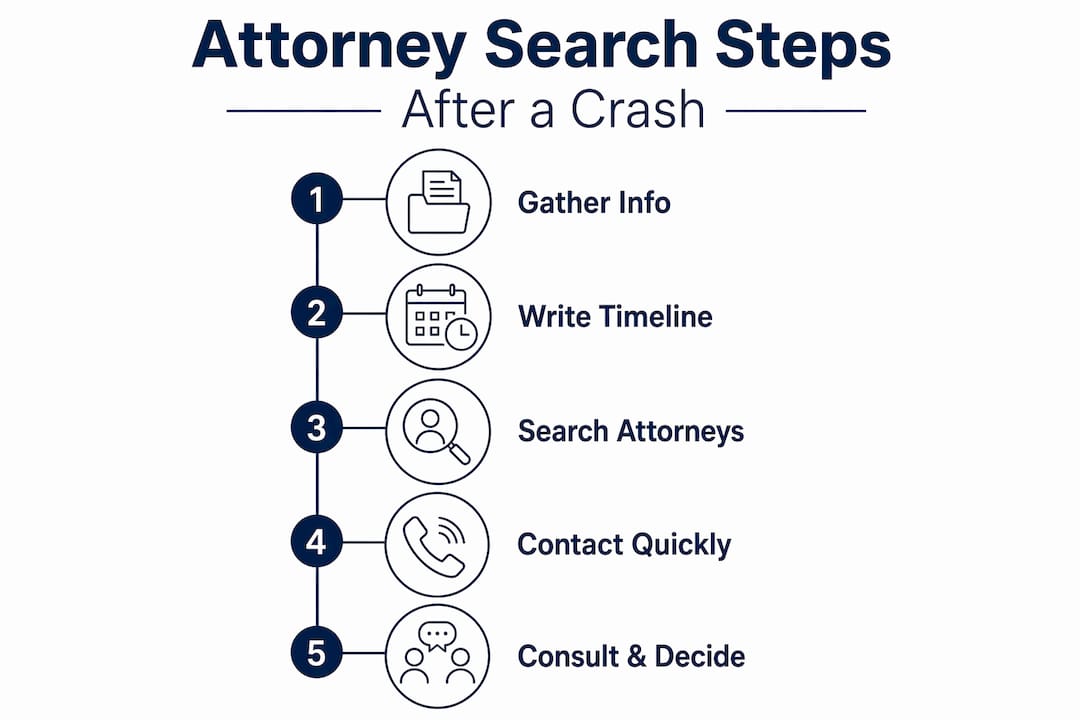
How to find and contact a qualified attorney fast
Speed matters here, but so does quality. Not every attorney who shows up in a Google ad is the right fit for your case. Here are the most reliable methods to find a quick personal injury lawyer without sacrificing quality.

1. Use a bar association referral service
This is the most underused and most reliable option. Bar association referral programs pre-screen attorneys before listing them. The Boston Bar Association offers a 30-minute consultation for a maximum fee of $25, connecting you directly with a matched lawyer after reviewing your issue. The NYC Bar Legal Referral Service works similarly. Referral counselors clarify your needs, match you with vetted attorneys based on your specific legal issue, and provide contact details with confirmation. Their pre-screened attorney matching means you skip the guesswork entirely.
2. Search online directories with caution
Online directories can be useful, but paid placements often appear at the top regardless of attorney quality. When using any directory, filter by personal injury specialty, check for verified reviews, and look for attorneys who list their contingency fee policy upfront. Skip anyone who can't be verified through your state bar's public records.
3. Contact local law firms directly
Search for local personal injury lawyers in your area and call two or three firms directly. When you call, ask these questions immediately:
- Do you handle personal injury cases on contingency?
- Will I speak with an attorney during the consultation, or an intake specialist?
- How quickly can you schedule a consultation?
- Do you have experience with cases similar to mine?
Pro Tip: Ask specifically whether you'll speak with a licensed attorney during your first call or consultation. Some firms route initial contacts through intake staff, which delays real legal feedback. Speaking directly with an attorney during your first contact improves the quality of your case assessment significantly.
Here's a quick comparison of your main options:
| Method | Speed | Vetting Level | Cost |
|---|---|---|---|
| Bar association referral | Fast (same day) | High (pre-screened) | $25 to $35 |
| Online directory | Varies | Low to medium | Often free |
| Direct firm contact | Fast | You must verify | Free to $0 |
| Referral from friend | Varies | Informal | Free |
Common mistakes that slow you down or hurt your case
Knowing what not to do is just as important as knowing what to do. These are the mistakes that cost accident victims time, money, and sometimes their entire claim.
-
Waiting too long to call. Most states set a 2-year filing deadline for personal injury claims, but some cases involving government defendants require formal notice within 90 to 180 days. Missing those early deadlines can end your case before it starts.
-
Choosing based on advertising alone. Heavy TV and billboard advertising does not mean better results. Some of the most marketed attorneys in any city are high-volume firms that settle cases quickly and cheaply rather than fighting for full value.
-
Calling without any preparation. Showing up to a consultation with no documents and no timeline forces the attorney to work from memory and guesswork. It slows down case evaluation and can make your claim look weaker than it is.
-
Misunderstanding the fee structure. Most personal injury lawyers work on a contingency fee basis, meaning you pay no attorney fees unless you recover compensation. However, some case expenses like filing fees or expert witness costs may still be your responsibility. Ask about this upfront.
-
Talking to the insurance adjuster first. This is a serious mistake. Insurance adjusters are trained to minimize payouts. Anything you say can be used to reduce your settlement. Read more about talking to adjusters before a lawyer before you pick up that call.
Remember this: Missing administrative notice deadlines for special defendants like government entities can result in a lost claim even if the main filing deadline hasn't passed yet. Don't assume you have time to wait.
What to expect from your first attorney consultation
Your first consultation is not a commitment. It's a conversation. Most attorneys offer free or low-cost initial meetings, and there is no obligation to hire anyone after speaking with them.
Here's what typically happens:
- The attorney (or intake team) asks you to describe the accident and your injuries
- They review any documents you've brought
- They ask about your medical treatment and current status
- They assess liability, meaning who was at fault and how clearly that can be proven
- They give you an initial read on whether your case has merit
Free consultations typically last 30 to 60 minutes, and phone or video calls provide equivalent quality to in-person meetings. You don't need to drive across town to get solid legal feedback.
Come ready to answer these questions:
- When and where did the accident happen?
- What injuries did you sustain, and are you still being treated?
- Have you spoken with any insurance companies yet?
- Do you have any documentation with you?
Pro Tip: Bring your one-page written timeline to the consultation. Attorneys who receive organized documentation at intake can assess your case faster and give you more specific feedback in the same meeting.
To gauge whether an attorney is the right fit, pay attention to whether they explain things clearly, whether they seem genuinely interested in your case, and whether they give you direct answers rather than vague reassurances.
Next steps after choosing your attorney
Once you decide to move forward with an attorney, here's what happens next:
-
Sign the representation agreement. This is a formal contract that outlines the contingency fee percentage, what expenses you may owe, and how the attorney-client relationship works. Read it carefully before signing.
-
Complete a full intake. Your attorney's team will collect all documents, request medical records, and begin building your case file. Be thorough and honest here.
-
Stop all direct communication with insurers. Once you have an attorney, all insurance contact goes through them. This protects your claim from the start.
-
Follow your treatment plan. Gaps in medical treatment are one of the most common ways insurance companies reduce settlement offers. Stay consistent with your care.
-
Stay responsive. Your attorney will need updates from you as your treatment progresses. Respond to calls and emails promptly. Cases move faster when clients stay engaged.
-
Understand the timeline. Most personal injury cases take months to resolve, and some take longer depending on severity and complexity. Check the filing deadline for your state so you understand the outer boundary of your timeline.
Early legal involvement helps preserve evidence, lock in witness statements, and protect your rights before critical deadlines pass. The sooner you start, the more options your attorney has.
My honest take: speed and preparation change everything
I've seen how differently cases play out depending on when someone calls an attorney. The people who act within days of an accident almost always have stronger cases. Evidence is fresh. Witnesses remember details. Medical records are consistent from the start.
What I've learned is that most people who wait do so because they think they can handle it alone, or because they assume they'll feel better soon and won't need legal help. That thinking costs people real money. Insurance companies start building their defense from day one. You should be doing the same.
The other thing I've noticed is that preparation matters just as much as speed. I've seen people call an attorney the day after an accident with nothing organized, and the consultation goes in circles. I've also seen people call two weeks later with a clean timeline and a folder of documents, and the attorney had a clear picture of the case within 15 minutes.
My honest advice: don't wait, and don't call empty-handed. Those two things together give you the best possible start.
— Scott
How Wreckmatch connects you with the right attorney fast
After an accident, you shouldn't have to spend hours searching, calling, and hoping you picked the right lawyer. That's exactly why Wreckmatch exists.
Wreckmatch uses AI-powered intake and fast-response matching to connect accident victims with experienced personal injury attorneys quickly and at no upfront cost. You answer a few questions, and Wreckmatch does the work of finding a qualified, licensed attorney who handles cases like yours. Whether you're in Texas, Illinois, Florida, or anywhere else, Wreckmatch has state-specific attorney referrals ready for you. Get free legal help now and stop guessing about your next step.
FAQ
How quickly should I contact a personal injury attorney?
Contact an attorney as soon as possible after your accident, ideally within days. Some cases involving government defendants require formal notice within 90 to 180 days, and waiting too long can permanently close your legal options.
Do personal injury attorneys charge upfront fees?
Most personal injury attorneys work on contingency, meaning no fees unless you win. You may still be responsible for certain case expenses, so ask about those during your first consultation.
What documents should I bring to my first consultation?
Bring your accident report, medical records, photos, insurance communications, and a written timeline of events. Organized documentation helps attorneys evaluate your case faster and give you more specific feedback.
What is the statute of limitations for personal injury claims?
It varies by state. Illinois, for example, allows 2 years to file most injury claims. Check your state's specific deadline as soon as possible because some exceptions are much shorter.
Can I find a qualified attorney without searching through ads?
Yes. Bar association referral services like the NYC Bar Legal Referral Service pre-screen attorneys and match you based on your specific legal issue, cutting through unvetted listings entirely.