
A life care plan is an expert-prepared, evidence-based projection of every lifetime medical and supportive need after a serious injury, with costs organized year by year. This document sits at the center of any serious injury settlement guide because it converts abstract future damages into concrete numbers that insurance carriers, attorneys, and juries can evaluate. Without one, you are negotiating blind. This life care plan injury settlement guide walks you through what these plans contain, how to get one, how to use it in settlement talks, and the mistakes that cost injured people the most money.
What does a life care plan include?
A life care plan projects every medical and supportive need for 30–50 years ahead, converting future damages into concrete data. That scope is what makes it the most powerful document in a catastrophic injury case.
Core medical components
The medical section covers treatments, surgeries, therapies, medications, and durable medical equipment. Each item lists frequency, duration, unit cost, and replacement schedule. A spinal cord injury plan, for example, might specify annual physiatry visits, quarterly physical therapy, and a power wheelchair replacement every five years.

Non-medical costs that most people miss
Attendant care sometimes exceeds medical costs in catastrophic cases. This category includes home modifications like ramps and roll-in showers, vehicle modifications, transportation to appointments, and paid caregiver hours. Leaving these out of your plan leaves real money off the table.
How the plan is built
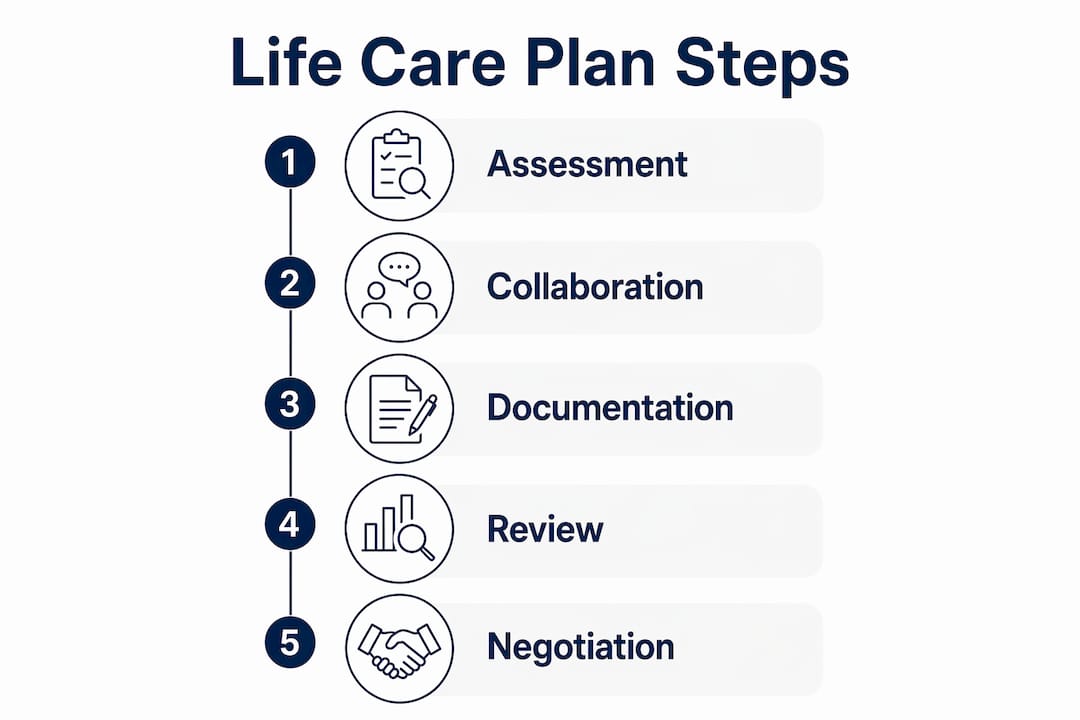
Certified life care planners collaborate with treating physicians and specialists to compile a dynamic, standards-based document. They pull cost data from published fee schedules, regional labor rates, and vendor catalogs. The result is a budget-like plan that quantifies every dollar of future care in a format courts and insurers recognize.
Pro Tip: Ask your life care planner to show you the cost source for every single line item before the plan is finalized. Unsupported costs are the first thing opposing experts attack.
How do you get a life care plan?
Getting the right planner is as important as getting the plan itself. Follow these steps to do it correctly.
-
Ask your attorney first. Personal injury attorneys who handle catastrophic injury cases work with certified life care planners regularly. Your attorney can recommend planners with courtroom experience and strong credentials.
-
Verify credentials. Look for a Certified Life Care Planner (CLCP) or a Certified Rehabilitation Counselor (CRC) with life care planning training. The International Academy of Life Care Planners sets the professional standard in the United States.
-
Confirm collaboration with your treating doctors. A planner who does not speak directly with your physicians will produce a weaker plan. The planner must review your medical records and consult with your care team to build an accurate projection.
-
Understand the cost. Life care plans for catastrophic injuries are not cheap. Fees vary by case complexity and planner experience. Most personal injury attorneys fund the plan as a case expense and recover it from the settlement.
-
Start early. Commission the plan as soon as your medical condition reaches maximum medical improvement, or MMI. MMI is the point at which your doctors can reliably project your long-term needs. Starting before MMI produces an incomplete plan.
-
Avoid planners hired only by insurers. Defense life care planners exist to minimize projected costs. Your plan should come from a planner retained by your legal team, not the opposing side.
How is a life care plan used in settlement negotiations?
A life care plan is the primary damages exhibit in catastrophic injury litigation. It shifts the conversation from past medical bills to a structured, forward-looking valuation that is far harder for insurers to dismiss.
Settlement leverage vs. trial evidence
| Use | How the life care plan functions |
|---|---|
| Pre-settlement negotiation | Gives your attorney a documented, dollar-specific demand backed by expert analysis |
| Mediation | Provides a neutral third party with a credible, organized future damages framework |
| Trial | Serves as the central exhibit for a life care planning expert witness to walk the jury through |
| Structured settlement design | Informs annuity payment streams to match the timing of projected care costs |
Insurance adjusters respond differently to a demand backed by a certified planner's report than to a general estimate. A well-prepared plan forces the insurer to either accept the projections or hire their own expert to challenge them. That challenge costs the insurer time and money, which creates real settlement pressure.
Structured settlements use the life care plan as a source document to align annuity payments with the actual timing of projected needs. A wheelchair replacement due in year seven, for example, can be funded by a lump-sum annuity payment scheduled for that year. Errors in replacement schedules can create funding gaps that leave you paying out of pocket decades later.
Pro Tip: Never accept a settlement offer until your life care plan is complete and your attorney has reviewed every line item. A number that sounds large today may cover only a fraction of your actual lifetime costs.
What mistakes can derail your life care plan and settlement?
The most expensive mistakes in life care planning and settling injury claims are predictable. Knowing them in advance protects your recovery.
-
Settling too early. Insurance adjusters pressure for quick settlements before your life care plan is complete. Early agreements routinely undervalue future needs, leaving you responsible for costs the settlement was supposed to cover.
-
Ignoring non-medical costs. Attendant care, home modifications, and transportation are often the largest line items in a catastrophic injury plan. Omitting them produces a plan that looks complete but funds only part of your actual life.
-
Accepting an internally inconsistent plan. Defensibility and internal consistency are the two qualities opposing experts target first. If your plan lists a medication at one frequency in one section and a different frequency elsewhere, the defense will use that gap to discredit the entire document.
-
Failing to align with a Medicare Set-Aside. When Medicare is involved, a Medicare Set-Aside reserves funds for future Medicare-covered care to keep Medicare as the secondary payer. The MSA and the life care plan must align on covered line items. Misalignment creates payer scrutiny and administrative problems after settlement.
-
Choosing a planner without litigation experience. A plan that reads well in a report but falls apart under cross-examination is a liability. Your planner must be able to defend every cost source and methodology on the witness stand.
-
Disputing line items without expert support. If the defense challenges specific items, your attorney needs a rebuttal from your planner backed by accepted costing methodologies. Informal objections without expert support rarely succeed.
Key Takeaways
A defensible, complete life care plan is the single most important document for maximizing compensation for injuries in any serious injury settlement.
| Point | Details |
|---|---|
| Life care plan definition | An expert-prepared, year-by-year projection of all future medical and supportive costs after serious injury. |
| Non-medical costs matter | Attendant care, home modifications, and transportation can exceed medical costs in catastrophic cases. |
| Timing is critical | Wait for maximum medical improvement before commissioning the plan to get accurate long-term projections. |
| Settlement leverage | A certified planner's report forces insurers to accept projections or fund their own expert challenge. |
| Avoid premature settlement | Settling before the plan is complete risks leaving lifetime care costs uncovered. |
Why I think most injured people leave money on the table
After working with accident victims and personal injury attorneys across the country, the pattern I see most often is not fraud or bad lawyering. It is impatience. Serious injuries create financial pressure fast. Medical bills arrive before settlements do. Insurance adjusters call within days of an accident offering numbers that feel significant when you are in pain and worried about money.
The life care plan process takes time. It requires your condition to stabilize, your doctors to project your long-term needs, and a certified planner to build a document that can survive expert challenge. That process cannot be rushed without producing a weaker plan. A weaker plan produces a lower settlement. A lower settlement means you fund the gap yourself, sometimes for decades.
The attorneys who get the best outcomes for catastrophically injured clients are the ones who specialize in these cases and understand how to use a life care plan as a negotiating tool, not just a paperwork requirement. They know how to align the plan with a structured settlement design that funds care at the right time. They know how to defend every line item when the defense expert attacks.
My honest advice: advocate for the full valuation. The plan exists to protect you for the rest of your life. Do not trade that protection for a faster check.
— Scott
Wreckmatch connects you with attorneys who know life care plans
Serious injury cases require attorneys who understand life care planning, not just general personal injury law. Wreckmatch matches injured people with experienced attorneys quickly, at no upfront cost.

After a serious accident, the next steps matter. Wreckmatch uses fast-response support and attorney matching to connect you with law firms that handle catastrophic injury claims and understand how to build and use life care plans in settlement negotiations. There is no fee to get matched, and attorneys work on contingency, meaning you pay nothing unless you recover. Get free legal help today and make sure your settlement reflects your actual lifetime needs.
FAQ
What is a life care plan in an injury case?
A life care plan is an expert-prepared document projecting all future medical and supportive care costs after a serious injury, organized year by year. It serves as the primary damages exhibit in settlement negotiations and litigation.
Who prepares a life care plan?
A Certified Life Care Planner (CLCP) prepares the plan in collaboration with treating physicians and specialists. The planner documents frequency, duration, and unit costs for every projected need.
When should a life care plan be completed?
The plan should be completed after the injured person reaches maximum medical improvement (MMI), the point at which doctors can reliably project long-term care needs. Starting before MMI produces an incomplete and potentially inaccurate plan.
How does a life care plan affect my settlement amount?
A complete, defensible life care plan gives your attorney a documented, dollar-specific demand that insurers must address directly. It typically increases settlement value by capturing future costs that general estimates miss, including attendant care and home modifications.
What is a Medicare Set-Aside and how does it relate to a life care plan?
A Medicare Set-Aside reserves funds within a settlement for future Medicare-covered injury care, keeping Medicare as the secondary payer. It must align with the life care plan's covered line items to avoid payer scrutiny after settlement.
Recommended
- Catastrophic Injury Structured Settlement Guide 2026
- Severe Injury After a Car Accident in Plano, Texas (2026) | WreckMatch Blog | WreckMatch
- Catastrophic Injury After a Car Crash — Next Steps (2026) | WreckMatch Blog | WreckMatch
- Catastrophic Injury Car Crash in Plano, Texas (2026) | WreckMatch Blog | WreckMatch