
A personal injury settlement is the formal process by which an injured claimant and an at-fault party agree on compensation without going to trial. The personal injury settlement process explained in full covers seven distinct stages: medical treatment, evidence gathering, attorney representation, demand letter submission, insurance negotiation, possible mediation, and final resolution. Most people assume this process is quick. It is not. Typical cases take up to 18 months or more from the date of injury through final payment. Understanding each stage before you reach it gives you a real advantage.
What are the key steps in the personal injury settlement process?
The steps in a personal injury settlement follow a predictable sequence. Knowing what comes next helps you avoid costly mistakes at each stage.
-
Seek medical treatment immediately. Your medical records are the foundation of your entire claim. Medical records document injury progression, emotional distress, and long-term impact. Without them, you have no case.
-
Hire a personal injury attorney. An attorney investigates the accident, gathers police reports, witness statements, and surveillance footage, and builds your legal strategy. Most personal injury lawyers work on a contingency fee basis, meaning you pay nothing unless you win.
-
Complete your medical treatment. Do not rush this step. You need to reach Maximum Medical Improvement, or MMI, before settling. MMI is the point at which your doctor determines your condition has stabilized. Settling before MMI means you cannot account for future surgeries, therapy, or permanent impairment.
-
Send the demand letter. Your attorney drafts a demand letter outlining your injuries, medical costs, lost wages, pain and suffering, and the total compensation amount you are requesting. This letter officially opens negotiations.
-
Receive and respond to the insurer's offer. The insurance company reviews your demand and responds. Their first offer is almost always low. Multiple rounds of counteroffers typically follow before both sides reach a number.
-
Attempt mediation if needed. If direct negotiation stalls, a neutral mediator facilitates a structured settlement discussion. Mediation is faster and cheaper than a trial and often breaks deadlocks.
-
Sign the settlement agreement or file a lawsuit. Once both parties agree on a number, you sign a settlement agreement and release all future claims. If no agreement is reached, your attorney files a lawsuit and the case moves into litigation.
Pro Tip: Never give a recorded statement to the opposing insurance adjuster before speaking with your attorney. Adjusters are trained to ask questions that minimize your claim.
How long does the personal injury settlement process take?

Timeline is the question every claimant asks first. The honest answer is that it depends on your injuries, the number of parties involved, and how aggressively the insurer fights the claim.
| Phase | Typical Duration |
|---|---|
| Medical treatment and reaching MMI | 1–12 months |
| Evidence gathering and attorney investigation | 1–3 months |
| Demand letter and initial negotiation | 1–3 months |
| Mediation or extended negotiation | 1–4 months |
| Litigation (if filed) | 6–18+ months additional |
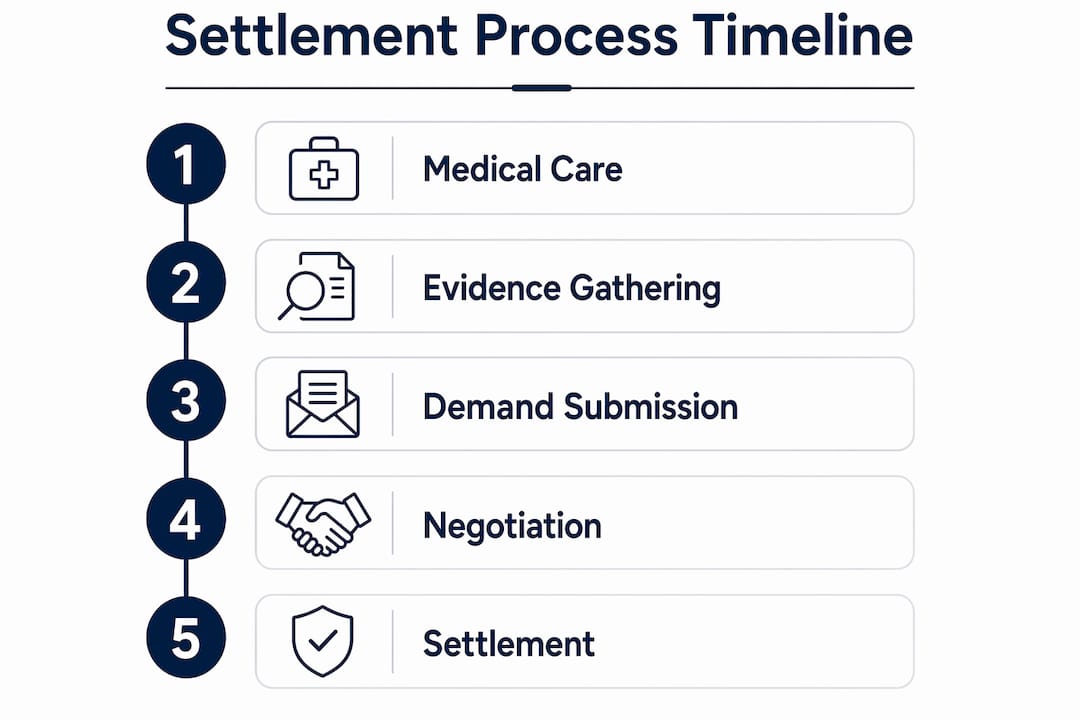
Simple soft-tissue cases with clear liability can settle in three to six months. Complex cases involving severe injuries, multiple defendants, or disputed fault routinely exceed 18 months. The single biggest driver of delay is medical recovery. Settling before your treatment is complete locks in a number that may not cover your actual costs.
One factor many claimants miss involves government defendants. If your injury involves a city vehicle, a public bus, or a government employee, Notice of Claim deadlines range from 30 to 180 days. Missing that window can permanently bar your claim, regardless of how strong your case is.
Pro Tip: Ask your doctor directly when you have reached MMI. Get that determination in writing before your attorney sends the demand letter. It protects you from accepting a settlement that leaves future medical bills uncovered.
For a detailed breakdown of how timing works in your state, the car accident claim timeline resource from Wreckmatch walks through each phase with specific timeframes.
What negotiation tactics and challenges should you expect?
Understanding how insurers behave during negotiation is the most practical knowledge you can have. Insurance companies are not neutral parties. Their goal is to pay as little as possible on every claim.
Here is what typically happens after your demand letter arrives:
- The lowball opening offer. Initial insurer counteroffers frequently range from 0% to 50% of the demand amount. That is not a negotiating starting point. It is a test to see if you will accept fast cash and walk away.
- The early settlement push. Insurers often contact claimants directly in the days after an accident, before an attorney is involved. Early settlement offers typically do not reflect full damages. Accepting one means signing away your right to future compensation.
- Requests for recorded statements. Adjusters use these to find inconsistencies in your account that reduce your payout.
- Delays and documentation requests. Repeated requests for additional records are a common tactic to wear claimants down and push them toward accepting less.
"Quick settlement offers usually mean significant money is left on the table. Patience with negotiation often leads to better outcomes." — CounselHound, 2026
The strongest counter to all of these tactics is documentation. Strong medical records, clear photos of the accident scene, expert witness statements, and a well-constructed demand letter give your attorney the leverage to push back. Settlement discussions intensify during discovery and mediation as both sides see the full picture of the case. That is when real compromise becomes possible.
For a deeper look at how to handle insurer behavior, Wreckmatch's guide on dealing with insurance adjusters covers the specific tactics adjusters use and how to respond.
Should you settle or go to trial in a personal injury case?
Over 90% of personal injury cases settle before a verdict, often during discovery or mediation. That statistic reflects a practical reality: trials are expensive, slow, and unpredictable for both sides.
| Factor | Settlement | Trial |
|---|---|---|
| Timeline | Weeks to months after agreement | 1–3+ years from filing |
| Cost | Lower attorney fees overall | Significant litigation costs |
| Certainty | Guaranteed amount | Jury verdict is unpredictable |
| Privacy | Confidential terms | Public court record |
| Emotional toll | Lower | High, due to depositions and testimony |
Settlement gives you a guaranteed number and closure. A trial gives you the chance at a higher verdict but also the real risk of walking away with nothing. Attorneys evaluate this tradeoff by comparing the insurer's best offer against the likely range of jury verdicts for similar cases in your jurisdiction.
Litigation does become necessary in some situations. If the insurer refuses to negotiate in good faith, if liability is genuinely disputed, or if the gap between the offer and your actual damages is too large to bridge through negotiation, filing a lawsuit is the right move. Plaintiff depositions during litigation typically last 3–7 hours and are a significant commitment. Your attorney prepares you thoroughly for that process.
The Jewkes Firm's breakdown of the Georgia personal injury settlement guide offers a useful state-level perspective on how these decisions play out in practice.
Key takeaways
The personal injury settlement process requires patience, strong documentation, and a clear understanding of each stage before you reach it.
| Point | Details |
|---|---|
| MMI before settling | Never accept a settlement offer before your doctor confirms your condition has stabilized. |
| Low first offers are standard | Insurers routinely open at 0%–50% of the demand; expect multiple negotiation rounds. |
| Timeline varies widely | Most cases resolve in 6–18 months, but complex injuries or litigation can extend that significantly. |
| 90%+ cases settle before trial | Settlement offers certainty; trial offers a higher potential payout but carries real risk. |
| Government claim deadlines | Notice of Claim windows run 30–180 days for government defendants and cannot be missed. |
What i've learned watching claimants navigate this process
I have seen the same mistake repeat itself more than any other: claimants settle too fast. The pressure is real. Medical bills pile up, you are out of work, and the insurer is calling with what sounds like a reasonable number. But "reasonable" at week three is almost never what your case is actually worth.
The claimants who come out ahead share a few traits. They wait for MMI. They hire an attorney before giving any statements. They treat their medical records like evidence, because that is exactly what they are. And they understand that the first offer is not an offer. It is a probe.
The other thing I would tell anyone going through this: do not confuse speed with success. A fast settlement that covers your current bills but ignores future surgery, lost earning capacity, or permanent disability is not a win. It is a loss you will not recognize until years later.
Mediation is underused and underappreciated. When direct negotiation stalls, a skilled mediator can move both sides toward a number that neither would have reached alone. If your case is stuck, push for mediation before assuming trial is the only path forward.
The accident settlement negotiation process is not something you should navigate alone. An experienced attorney changes the math on every offer the insurer puts on the table.
— Scott
How Wreckmatch helps you navigate your claim
After a serious accident, most people do not know where to start. Wreckmatch was built specifically for that moment.
Wreckmatch connects injured people with experienced personal injury attorneys at no upfront cost. You fill out a short intake form, and Wreckmatch matches you with a licensed attorney in your area who handles cases like yours. No guessing, no cold calls, no confusion about whether you can afford help. Every attorney in the network works on a contingency fee basis, meaning you pay nothing unless you win. If you want to understand your rights before you speak with anyone, the Accident Survival Guide and the legal glossary give you plain-language explanations of every term and stage in the process. Get matched with an attorney today at WreckMatch.
FAQ
What does a personal injury settlement agreement include?
A settlement agreement is a binding contract that specifies the compensation amount, releases the at-fault party from future liability, and ends the claim. Once signed, you cannot seek additional compensation for the same injury.
How long does a personal injury settlement usually take?
Most personal injury cases resolve in 6–18 months, though complex cases involving severe injuries or litigation can take significantly longer. Reaching MMI before settling is the most important timing factor.
What is maximum medical improvement and why does it matter?
MMI is the point at which your doctor determines your condition has stabilized and further recovery is unlikely. Settling before MMI risks undervaluing your claim because future medical costs are not yet known.
Should i accept the first settlement offer from the insurance company?
No. First offers frequently range from 0% to 50% of the actual demand amount. Always consult your attorney before responding to any offer.
What happens if my personal injury case goes to trial?
If negotiations fail, your attorney files a lawsuit and the case enters discovery, depositions, and eventually a jury or bench trial. Trials are costly and unpredictable, which is why over 90% of cases settle before a verdict is reached.